Over the past 12 months, one topic has consistently come up in conversations with engineers, supervisors, project managers and M&E professionals across Ireland:
“What’s really happening with the European market?”
And honestly, it’s easy to see why.
From hyperscale data centres in Germany and the Nordics to pharmaceutical and life sciences developments across the Netherlands and Belgium, Europe is currently delivering some of the most technically advanced construction projects in the world.
For many Irish construction professionals, the attraction isn’t only the salary packages.
It’s the opportunity to:
- Work on major international projects
- Gain exposure to cutting-edge technology and complex builds
- Fast-track career progression
- Build experience with globally recognised contractors
- Increase future earning potential back home or abroad
But alongside the interest, there are still plenty of questions.
What are rotations actually like?
How does tax work?
What’s accommodation really like?
Which countries are busiest right now?
And is the move worth it long-term?
This guide breaks down what construction professionals should realistically expect before relocating to Europe in 2026.
Why are so many Irish Construction Professionals Looking at Europe
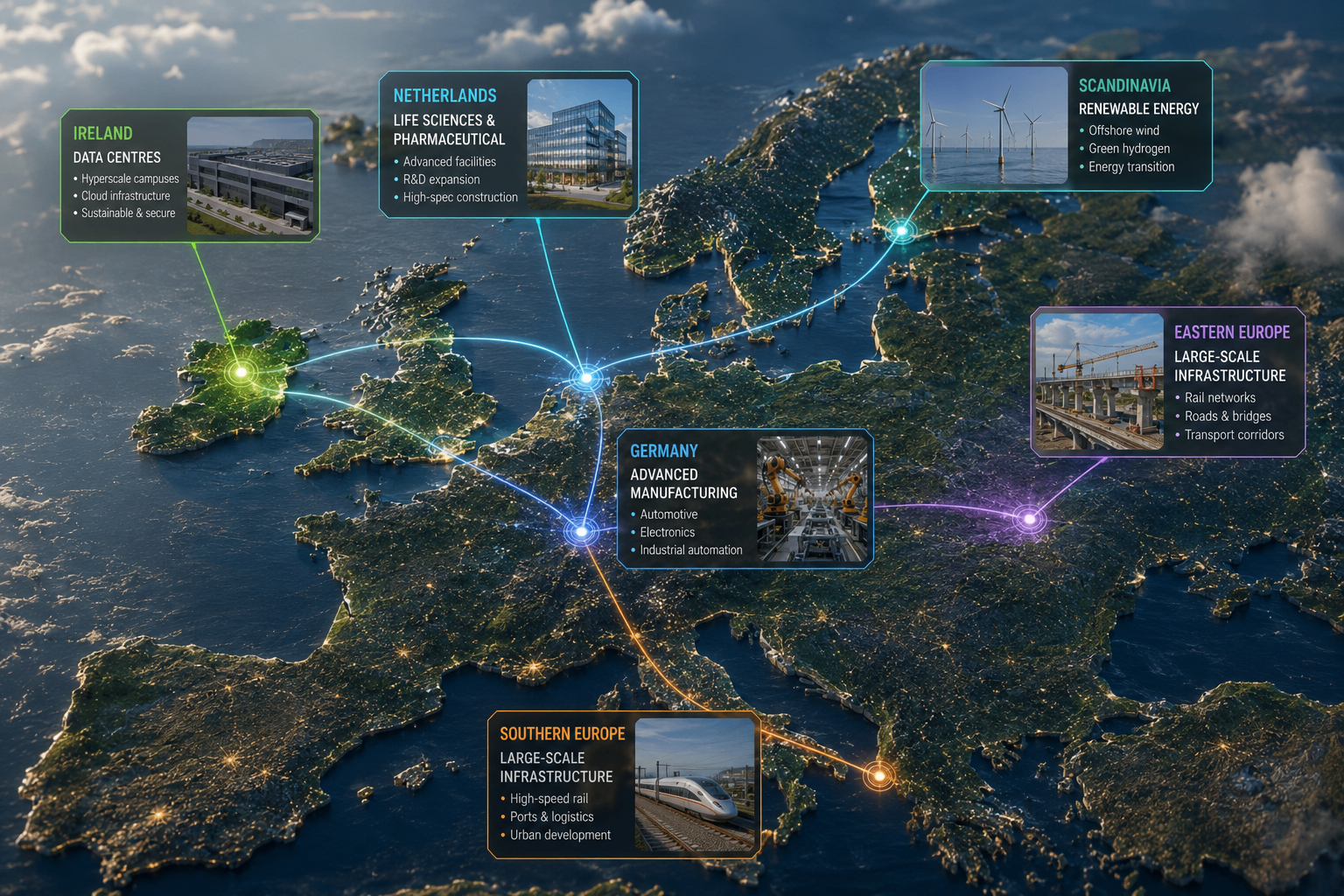
The European construction market has seen huge investment across:
- Data centres
- Life sciences
- Pharmaceutical facilities
- Renewable energy
- Large-scale infrastructure
- Advanced manufacturing
Demand has accelerated significantly due to AI growth, cloud infrastructure expansion, pharmaceutical investment and clean energy targets across Europe.
This has created major demand for:
- Site Engineers
- Project Managers
- Mechanical & Electrical Engineers
- Commissioning Engineers
- Quantity Surveyors
- CSA Engineers
- Supervisors & Foremen
- Health & Safety professionals
Contractors are actively competing for experienced Irish and UK construction talent because of the strong reputation Irish professionals have on large-scale builds.
Which Europe Countries Are Busiest Right Now
GermanyGermany continues to be one of the busiest regions for:
Frankfurt remains one of Europe’s largest data centre hubs due to growing AI and cloud demand. Common roles hiring:
|
NetherlandsThe Netherlands remains extremely active across:
Areas like Amsterdam, Leiden and Rotterdam continue to attract significant investment and require highly skilled engineering talent. Typical opportunities:
|
Nordics (Finland, Sweden & Denmark)The Nordic region continues to grow due to:
Many professionals are attracted by strong work-life balance structures and highly organised project environments. |
Belgium & SwitzerlandThese markets remain strong for:
Life sciences hiring across Europe continues to rise, particularly in regulated manufacturing and advanced therapies |
What Are Rotations Like on European Projects?
One of the biggest concerns candidates have is:
“How often will I get home?”
The reality is that rotations vary depending on:
- Contractor
- Country
- Project phase
- Client requirements
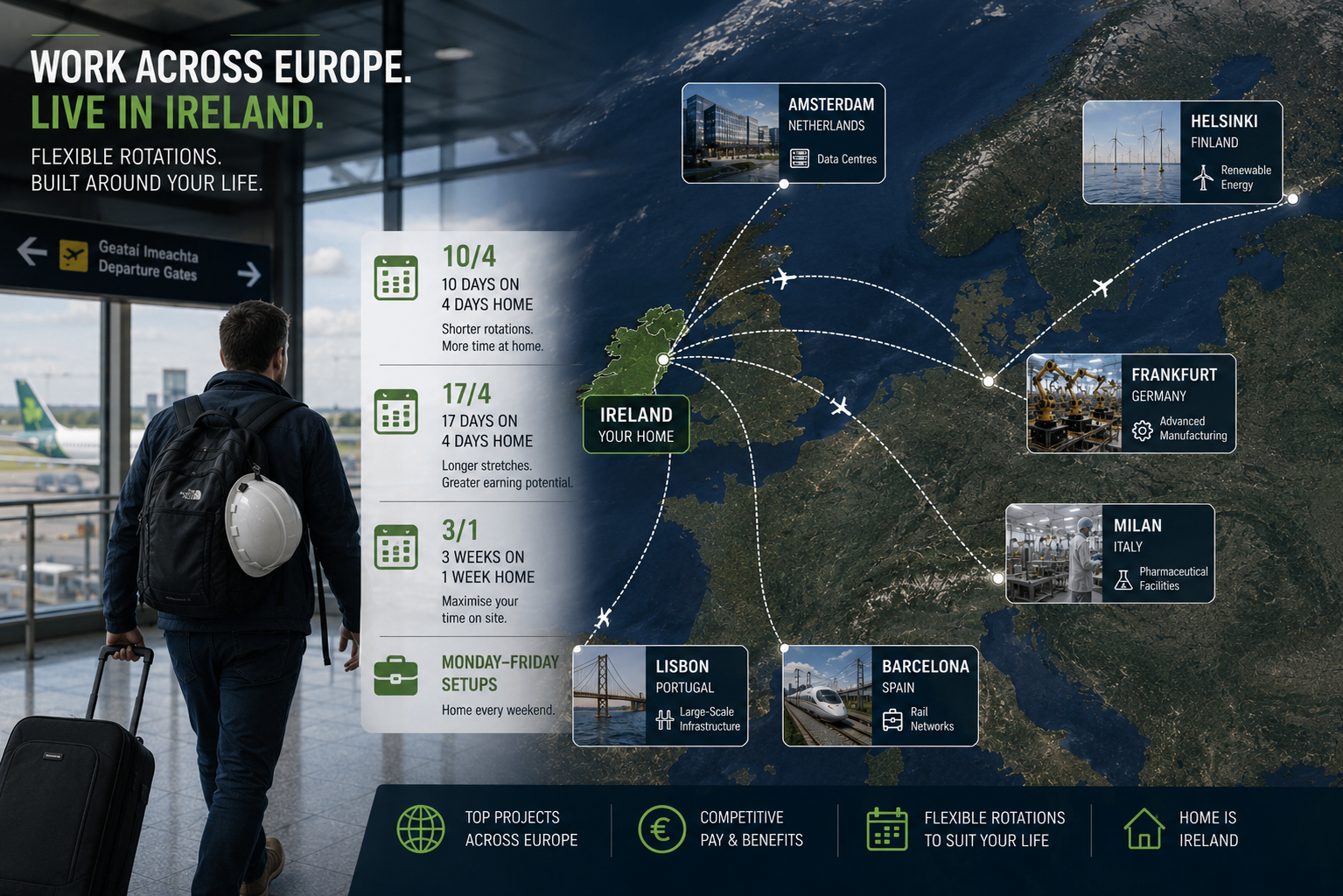
However, common rotations currently include:
- 10 days on / 4 days home
- 17 days on / 4 days home
- 3 weeks on / 1 week home
- Some permanent Monday - Friday setups
Many contractors also provide:
- Flights home
- Accommodation
- Transport allowances
- Living allowances
The structure is often designed to make long-term European work sustainable rather than forcing people to remain abroad continuously.
What Is Accommodation Really Like?
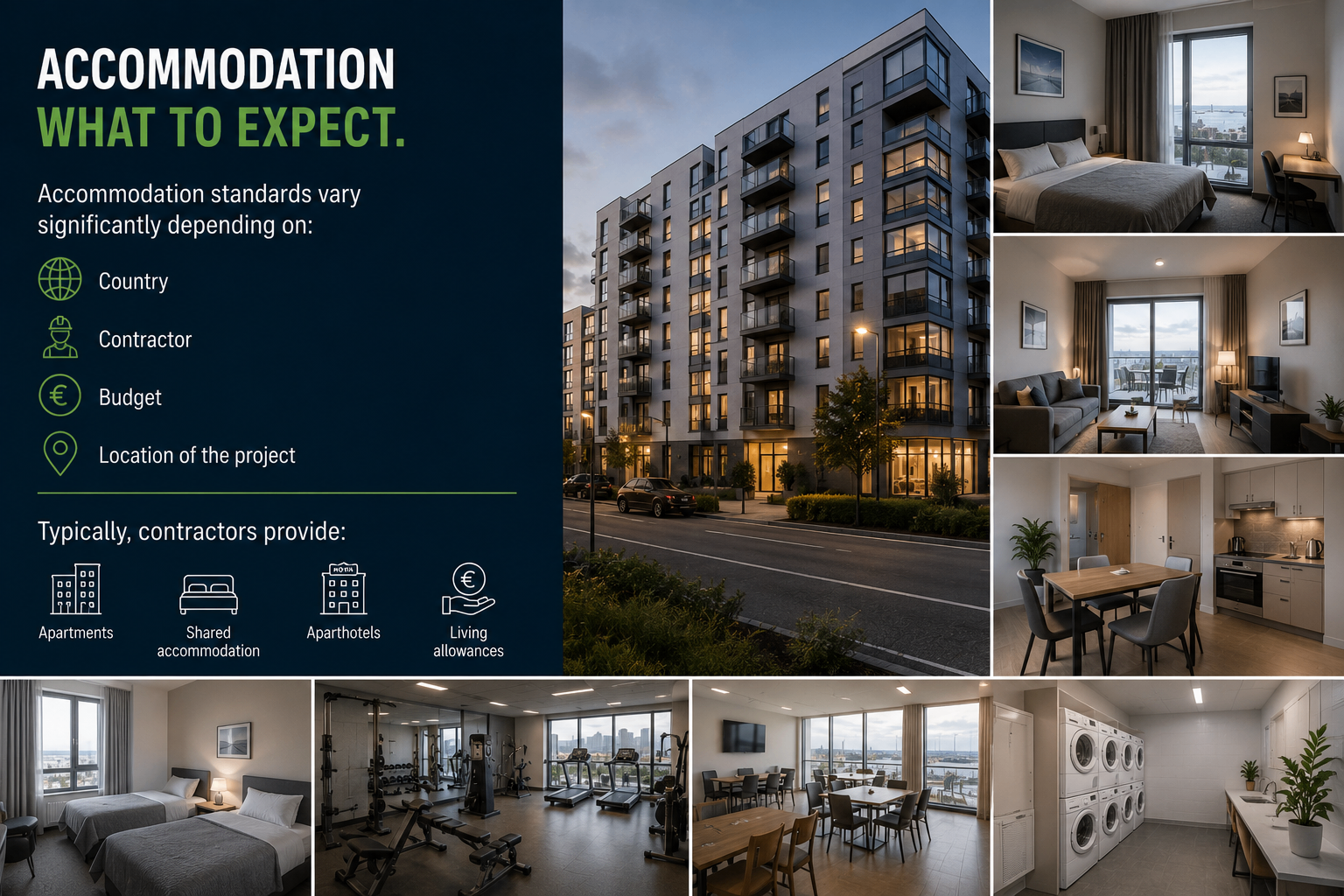
Accommodation standards vary significantly depending on:
- Country
- Contractor
- Budget
- Location of the project
Typically, contractors provide:
- Apartments
- Shared accommodation
- Aparthotels
- Living allowances
On larger projects, accommodation is often organised before arrival to make relocation easier.
One thing candidates should prepare for:
European rental markets can be expensive.
Cities like Amsterdam, Frankfurt and Copenhagen have high accommodation costs, so understanding exactly what your package includes is essential before accepting any role.
What Is Site Culture Like in Europe?This is something many professionals are pleasantly surprised by. While every site differs, many candidates report:
Large European projects often involve professionals from:
This creates highly international site environments where communication and organisation become extremely important. |
Working Hours: What Should You Expect?Hours vary depending on the contractor and phase of the project. Typical schedules include:
However, many professionals moving from Ireland notice:
Commissioning and turnover phases can become intensive, particularly on data centre projects.
|
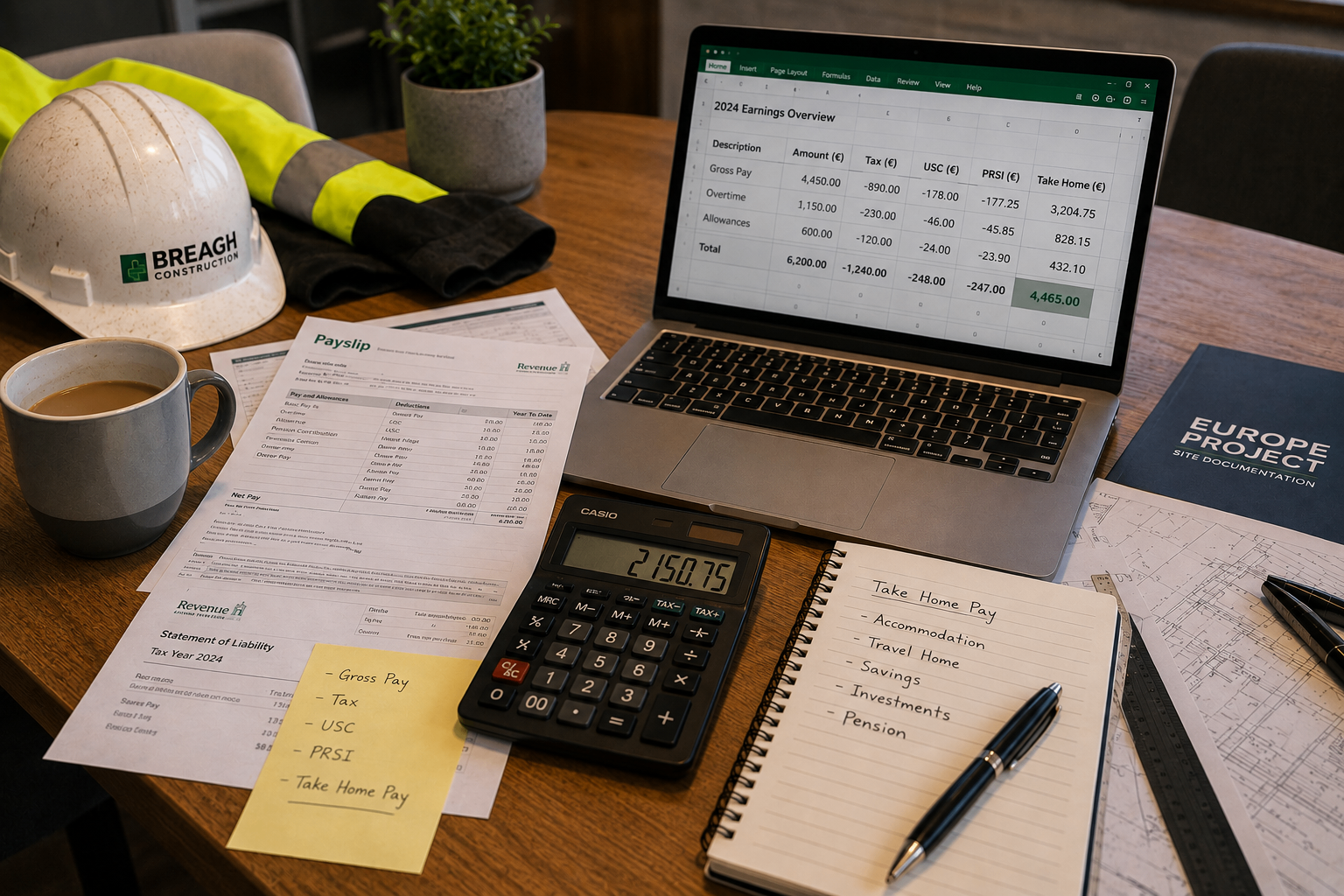
What About Tax and Take-Home Pay?
This is usually the biggest area of confusion.
The answer is:
It depends on the country and contract structure.
Key factors include:
- Local tax laws
- Residency status
- Length of stay
- PAYE vs contract setup
- Living allowances
- Tax equalisation arrangements
Some packages appear very high initially, but accommodation and taxation must always be factored in properly.
This is why candidates should always ask:
- What is the net take-home pay?
- Is accommodation included?
- Are flights covered?
- Are there daily allowances?
- How are rotations structured?
Understanding the full package matters more than the headline salary alone.
Why Data Centres Continue to Dominate Hiring
The biggest driver across Europe right now remains:
Data centre construction.
AI growth, cloud expansion and digital infrastructure demand are driving massive investment across Europe.
The market continues to face shortages across:
- Electrical Engineers
- Mechanical Supervisors
- CSA Managers
- Commissioning Teams
- Project Controls
- MEP Coordinators
Professionals with previous mission-critical or large-scale project experience remain highly sought after.
Is Working in Europe Worth It?
For many construction professionals, the answer is yes particularly from a long-term career perspective.
The biggest advantages tend to be:
- Exposure to complex builds
- Faster career progression
- Increased earning potential
- International project experience
- Stronger future CV positioning
Many professionals eventually return to Ireland with:
- Higher-level project exposure
- Improved technical knowledge
- Better salary positioning
- Experience on globally recognised projects
Final Thoughts
Europe is no longer viewed as a short-term stopgap for construction professionals.
For many engineers, supervisors and M&E specialists, it has become a genuine career development pathway.
But relocating successfully comes down to understanding the reality behind the opportunity:
- The rotations
- The package structure
- The living arrangements
- The site culture
- The long-term career value
The professionals who benefit most are usually the ones who ask the right questions before making the move.
If you’re considering opportunities in Europe, understanding the market properly before relocating can make a huge difference to both your experience and your long-term career progression.
Looking at Construction Opportunities Across Europe
At Breagh Recruitment, we’re speaking with professionals daily about:
- Data centre projects
- Life sciences developments
- M&E opportunities
- Rotational work
- European salary packages
- Long-term career planning
If you’d like a confidential conversation about what opportunities currently make the most sense for your experience, get in touch with our team.
Meet Our Team