


When you picture the future of Irish construction, where do you look?
Up?
At cranes across Dublin's skyline. New apartment blocks. Data centres. Pharmaceutical plants. Roads. Railways. Energy projects.
Maybe we're looking in the wrong direction.
Maybe we should be looking down.
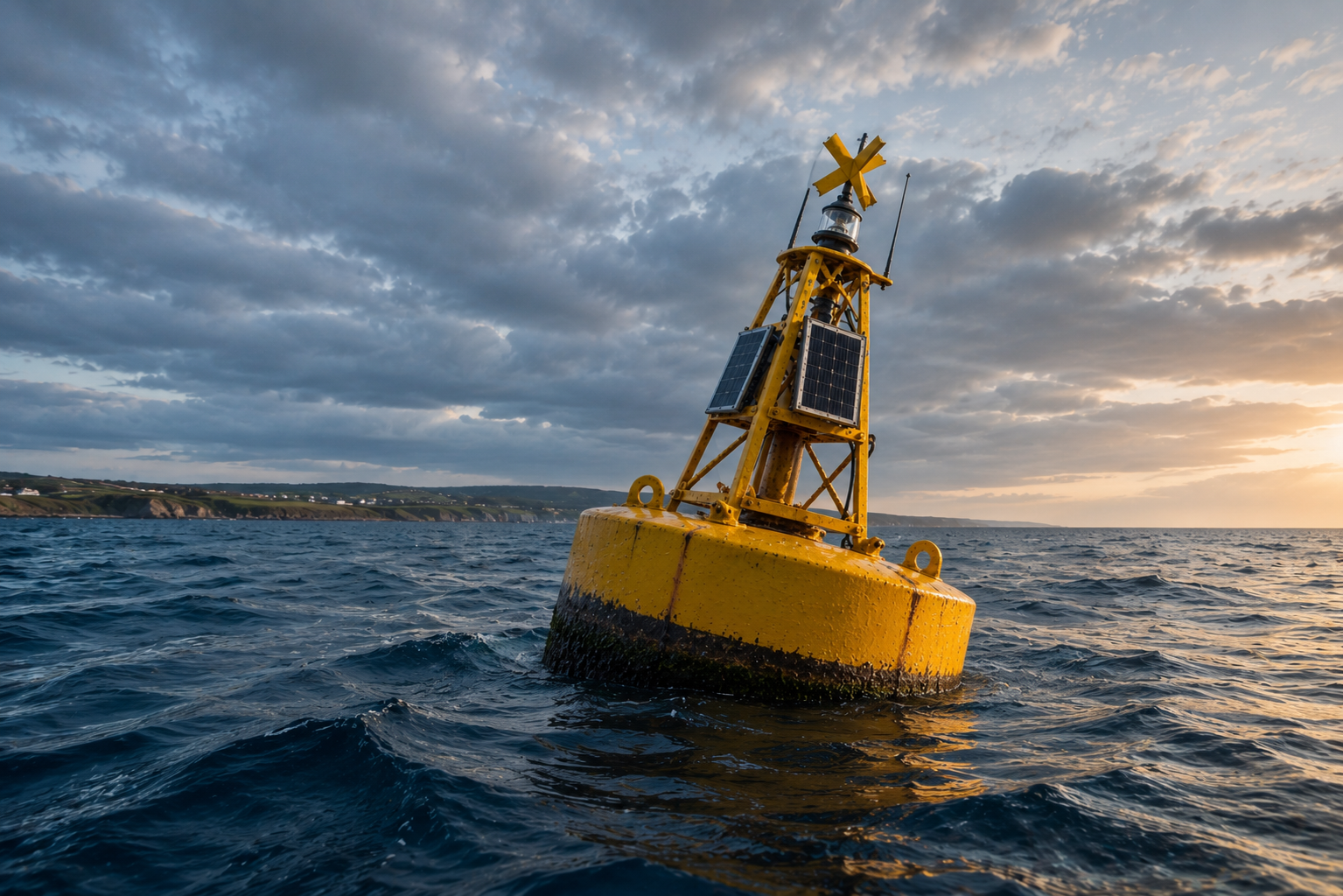
Beneath the Irish Sea and Atlantic Ocean is an infrastructure network most of us will never see.
Electricity cables stretching between countries. Fibre-optic connections carrying enormous quantities of data. Offshore electricity infrastructure. Foundations buried into the seabed. Pipelines. Interconnectors. Cable routes eventually disappearing beneath Irish beaches and resurfacing kilometres inland.
And over the coming decades, Ireland may need considerably more of it.
Not because we're suddenly going to start building cities beneath the Atlantic.
But because some of the biggest infrastructure ambitions Ireland has depend on something surprisingly unglamorous:
what we can build on, through and underneath the seabed.
The Infrastructure You Never See
Think about the infrastructure you use every day.
You drive over bridges.
You see electricity pylons.
You pass construction sites.
You notice cranes.
But some of Ireland's most strategically important infrastructure is almost completely invisible.
Take electricity.
Ireland already has subsea electricity connections with Britain, while the Celtic Interconnector is creating Ireland's first direct electricity connection with continental Europe through France.
Much of that connection isn't running beside a motorway.
It's running beneath the sea.
And this is where the construction story becomes interesting.
Because Ireland's future energy system won't simply depend on generating more electricity.
We also have to move it.
Ireland Could Become Far More Connected Beneath the Sea
Ireland is an island on the western edge of Europe.
Historically, that has created an obvious infrastructure challenge.
We're physically separated from Europe's major energy networks.
Subsea infrastructure changes that.
The Celtic Interconnector between Ireland and France is perhaps the clearest example of what that future could look like. At approximately 575km in length, with around 500km running beneath the sea, it will create a direct electricity connection capable of transporting up to 700MW between Ireland and France.
Think about that from a construction perspective.
Hundreds of kilometres of cable.
Marine surveys.
Seabed preparation.
Cable installation.
Landfall construction.
Converter stations.
Grid infrastructure.
Civil engineering.
Testing and commissioning.
And all of it ultimately becoming infrastructure that most people will never know is there.
Once completed, the biggest sign of the project may be precisely that you don't notice it.
But Laying a Cable Across the Seabed Isn't Like Digging a Trench
This is where subsea construction starts to look very different from the construction most of us recognise.
Before infrastructure can be installed, engineers need to understand what is actually down there.
What does the seabed look like?
How stable is the ground?
Where is the rock?
Where are existing cables?
Are there shipwrecks or archaeological features?
What environmental habitats need protecting?
Where are fishing grounds and shipping routes?
How should the cable be protected from anchors, fishing equipment and other activity?
A route that looks simple on a map can become extraordinarily complicated once engineering begins.
Specialist vessels survey the seabed.
Geophysical and geotechnical investigations build a picture of the ground conditions.
Engineers determine routes.
Cable-laying vessels install infrastructure.
Depending on the seabed, cables may then be buried or otherwise protected.
Suddenly, "laying a cable from Ireland to France" doesn't sound quite so straightforward.
Then There's the Point Where Sea Meets Land
One of the most interesting parts of subsea infrastructure actually happens right on the coastline.
Eventually, everything built offshore has to connect to something onshore.
A subsea electricity cable doesn't simply reach the beach and stop.
It needs a landfall.
From there, infrastructure continues towards substations, converter stations and the wider electricity network.
That creates a fascinating crossover between two construction worlds.
Offshore specialists may be dealing with marine installation kilometres out at sea.
Civil engineering teams may simultaneously be delivering trenching, ducting, horizontal directional drilling, compounds, access infrastructure and electrical works back on land.
The project might begin hundreds of kilometres offshore.
But eventually it becomes a construction site again.
The Seabed Is Getting Crowded
There is another problem Ireland will increasingly have to think about.
We're not the only ones who want to use the sea.
Shipping uses it.
Fishing uses it.
Telecommunications infrastructure crosses it.
Energy infrastructure crosses it.
Renewable projects need space.
Existing pipelines and cables already occupy routes.
Protected environments need consideration.
And coastal communities have legitimate interests in what happens near them.
The seabed might look enormous.
But the usable parts of it aren't unlimited.
As more infrastructure moves offshore, deciding where everything goes could become almost as important as building it.
That introduces another layer of engineering and planning that conventional construction rarely has to consider.
On land, you worry about utilities beneath the road.
Offshore, those utilities could stretch between countries.
What Happens When Something Breaks?
Building underwater infrastructure is difficult.
Maintaining it may be even more interesting.
If something goes wrong with a cable beneath a road, crews can excavate it.
If something goes wrong 50 kilometres offshore and tens of metres beneath the surface, the problem changes completely.
You need to locate the fault.
Mobilise specialist vessels.
Work around weather conditions.
Recover or access the infrastructure.
Carry out repairs.
Rebury or protect it.
And potentially do all of this while dealing with an asset that forms part of critical national infrastructure.
That means Ireland's underwater construction opportunity isn't necessarily limited to building projects.
Every kilometre of infrastructure placed beneath the sea creates something that may eventually need to be inspected, protected, repaired, upgraded or replaced.
Construction creates the asset.
Maintenance creates the industry around it.
Could Marine Experience Become Much More Valuable?
For Irish construction professionals, this is perhaps the most interesting part.
Nobody is suggesting a Site Engineer working on an apartment development can jump onto a cable-laying vessel next Monday.
Subsea engineering is highly specialised.
But look further along the infrastructure chain and the crossover becomes clearer.
Major marine and subsea projects still need:
Civil Engineers.
Electrical Engineers.
Project Managers.
Quantity Surveyors and commercial teams.
Planners.
HSEQ professionals.
Geotechnical specialists.
Surveyors.
Environmental professionals.
Logistics teams.
Commissioning specialists.
And contractors capable of delivering complex infrastructure packages.
The closer Ireland moves towards a more interconnected, electrified economy, the more valuable experience around energy, grid, utilities, marine civils and major infrastructure could become.
We've already watched this happen elsewhere in construction.
There was a point when "data centre experience" wasn't something most Irish construction professionals thought about.
Then investment accelerated.
Demand increased.
And suddenly people who had delivered those projects possessed experience everybody wanted.
It isn't unreasonable to ask whether specialist energy and marine infrastructure could experience something similar.
We May Be Thinking About Ireland's Infrastructure Map Incorrectly
Pull out a traditional map of Ireland and you see roads connecting cities.
Motorways.
Railways.
Ports.
Airports.
But the infrastructure map of Ireland in 2040 could look very different.
Imagine looking at Ireland from above and removing the water.
Suddenly, the country wouldn't appear isolated at all.
You might see electricity connections stretching towards Britain and continental Europe.
Telecommunications cables crossing the Atlantic.
Energy infrastructure extending from the coastline.
A network of offshore assets surrounding parts of the country.
The sea stops looking like the empty space around Ireland.
It starts looking like infrastructure territory.
And that is perhaps the biggest shift.
For most of construction history, Ireland's geography told us where we could build.
The coastline was effectively the edge of the map.
Increasingly, it isn't.
Ireland's Next Major Construction Site Might Be One Nobody Can See
The biggest Irish construction projects have traditionally been easy to recognise.
You can drive past them.
See the cranes.
Watch the structure rise.
And eventually walk inside what has been built.
The next generation of infrastructure may be different.
Some of it could sit beneath metres of seawater and kilometres of seabed.
There may be no skyline.
No tower crane.
No finished building.
But that doesn't make the engineering any less significant.
As Ireland strengthens its electricity connections, develops offshore energy and becomes increasingly dependent on digital and energy infrastructure, what happens beneath our surrounding waters becomes increasingly important.
Perhaps the next construction boom won't be defined by how high Ireland can build.
It could be defined by how far beneath the surface we're prepared to go.
Get in Touch
Want to find out how we can help your business grow? Get in touch with us by sending a message through this form!Related Articles

119 Irish Regeneration Projects: Where Regional Construction Demand Could Grow Next
When people talk about the next wave of construction in Ireland, attention usually goes to the same places. Housing. Dublin. Data centres. Pharmaceutical projects. Major infrastructure. But one of the...
 Cathal McKeever
3 Must-Ask Questions to End Your Construction Interview
3 Must-Ask Questions to End Your Construction Interview When it comes to construction interviews, most candidates spend all their time preparing to answer tough questions. While that’s important...
Cathal McKeever
Are Construction Professionals Expected to Sacrifice Too Much?
Are Construction Professionals Expected to Sacrifice Too Much? Long hours. Long commutes. Constant pressure. Time away from family. ...
 Fionn Mac Néill
Are Data Centres the Golden Ticket? The Truth Behind Ireland's Most Talked-About Construction Sector
Are Data Centres the Golden Ticket? Walk into almost any construction site canteen, recruitment office, or industry event in Ireland today, and you'll hear the same conversation. ...
 Ryan Kieran
Are Your Construction Skills More Valuable Than You Think?
You'd Likely Be in Strong Demand Right Now When was the last time you stopped to think about your career? For most construction professionals, the answer is probably "not recently." Betwe...
 Stephen Nugent
Balancing Commute, Site Location & Career Growth in Ireland: Are You Optimising Your Construction Career?
The Decision That Can Shape Your Entire Construction Career It's Monday morning. Your alarm goes off at 5:15am. By 6am you're on the M50, heading towards a project that's over 90 minutes away. You tel...
Stephen Nugent
Breagh Recruitment: 10 Years in Construction Recruitment
Breagh Recruitment: 10 Years in ConstructionRecruitment – My Journey This October 2025, Breagh Recruitment turns ten and I couldn’t be prouder. But our story started long before the f...
Cathal McKeever
Breagh Recruitment 2025: A Year of Growth, Grit and Milestones
Breagh Recruitment 2025: A Year of Growth, Grit and Milestones As 2025 comes to a close, it’s a natural time to pause, reflect, and take stock of just how far Breagh Recruitment has come not jus...
Cathal McKeever
Breagh Recruitment Celebrates Excellence at the Irish Construction Industry Awards 2025
Breagh Recruitment had the privilege of attending the Irish Construction Industry Awards 2025 at the Convention Centre Dublin. It was a memorable even...
Cathal McKeever
Built by Humans, Run by Robots: The Engineering Wonder That Is Yangshan Port
Built by Humans, Run by Robots: The Engineering Wonder That Is Yangshan Port At Breagh, we live and breathe construction and engineering. But every now and then, we come across a project that makes ev...
Cathal McKeever
